The temple was built by King Suryavarman II, a departure from the tradition of his predecessors who built temples dedicated to Shiva.
The entire structure is oriented to the west, a direction often associated with death in Hindu tradition, leading scholars to believe it may have functioned as a funerary temple.
The central tower rises 65 meters above the ground and is designed to represent the center of the Hindu universe.
The temple's moat serves a structural purpose, maintaining the water table level beneath the massive weight of the sandstone blocks to prevent the ground from subsiding.
There are nearly 2,000 unique carvings of Apsaras integrated into the sandstone walls, each with distinct hairstyles and jewelry.
The reflection of the temple in the lotus ponds is mathematically calculated to align with the temple's main axis.
The construction involved an estimated 5 to 10 million sandstone blocks, each weighing up to 1.5 tons.
During the equinoxes, the sun rises directly over the central tower when viewed from the main entrance causeway.
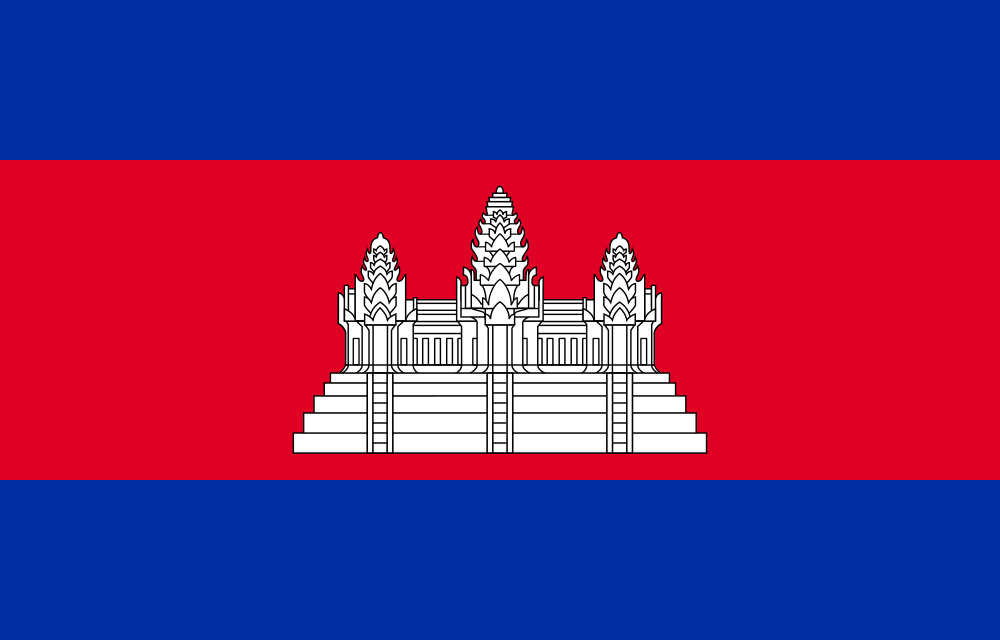
Angkor Wat is the largest religious monument in the world, originally constructed as a Hindu temple for the Khmer Empire in the 12th century before transitioning to Buddhist use. The structure covers approximately 162.6 hectares and is renowned for its central quincunx of towers reflecting Mount Meru. It is surrounded by a massive rectangular moat measuring 1.5 kilometers by 1.3 kilometers. The exterior walls are decorated with over 3,000 bas-relief carvings of Apsaras, or celestial dancers. Its orientation faces west, which is unconventional for Khmer temples typically aligned to the east. The temple was built using sandstone blocks transported from the Kulen Mountains. It remains an active site of pilgrimage for Buddhists from across Southeast Asia.
The edge of the northern reflection pond at sunrise.
Wear clothing that covers both your shoulders and knees to comply with sacred site regulations.
Bring a high-powered flashlight if planning to arrive before dawn for sunrise photography.
Stay hydrated by carrying a refillable water bottle, as the tropical heat is intense even in the early morning.
Avoid rushing through the temple galleries; many visitors miss the intricate bas-reliefs in the outer corridors by focusing only on the central towers.
Shoulders and knees must be covered; do not touch the carvings; maintain silence in areas where monks are present.